




The best handheld gaming consoles of today are a cause for celebration compared to the devices we played on just a few years back. Not even a decade ago, if you told me I would be playing modern, demanding titles like Cyberpunk 2077 on the move, I'd laugh it off.
Today, that's no longer a pipe dream. Not only are current-generation handhelds delivering the graphics and performance on par with modern game consoles and PCs, but we have a variety of portable powerhouses, big and small, to choose from — and we here at Tom's Guide have tested them all. Luckily, that puts us in a position to help you find just the portable gaming device that’s just right for you.
Alas, the pipe dream is getting pricey. Valve's Steam Deck OLED has shot up in price, and there's been a knock-on effect on other handhelds, all thanks to the RAM crisis. It's not the value buster it once was, but it's still a gaming handheld I recommend. Plus, with this cost rise, it gives more reason to save and opt for the all-powerful Asus ROG Xbox Ally X (or the absolutely outstanding but insanely priced MSI Claw 8 EX AI+). Looking for something retro and affordable? The Evercade Nexus is for you.
But there's more to choose from, and other exciting handhelds on the way. Here are the best handheld gaming consoles you can buy right now, based on our testing and reviews.

Ever since grabbing my first gaming handheld (a Game Boy Advance, if you must know), I've always wondered when we'd see modern console games finally become portable. Well, look at where we are now! Not only do classic and indie games run flawlessly on these machines, but we're also seeing demanding titles be played on the move. From my perspective, we couldn't be more spoiled for choice with the best gaming handheld consoles on the market today, and my team and I have tested the lot to help you find the one that fits your needs (and budget).
The best handheld gaming consoles you can buy today
Why you can trust Tom's Guide Our writers and editors spend hours analyzing and reviewing products, services, and apps to help find what's best for you. Find out more about how we test, analyze, and rate.
The best handheld gaming console overall
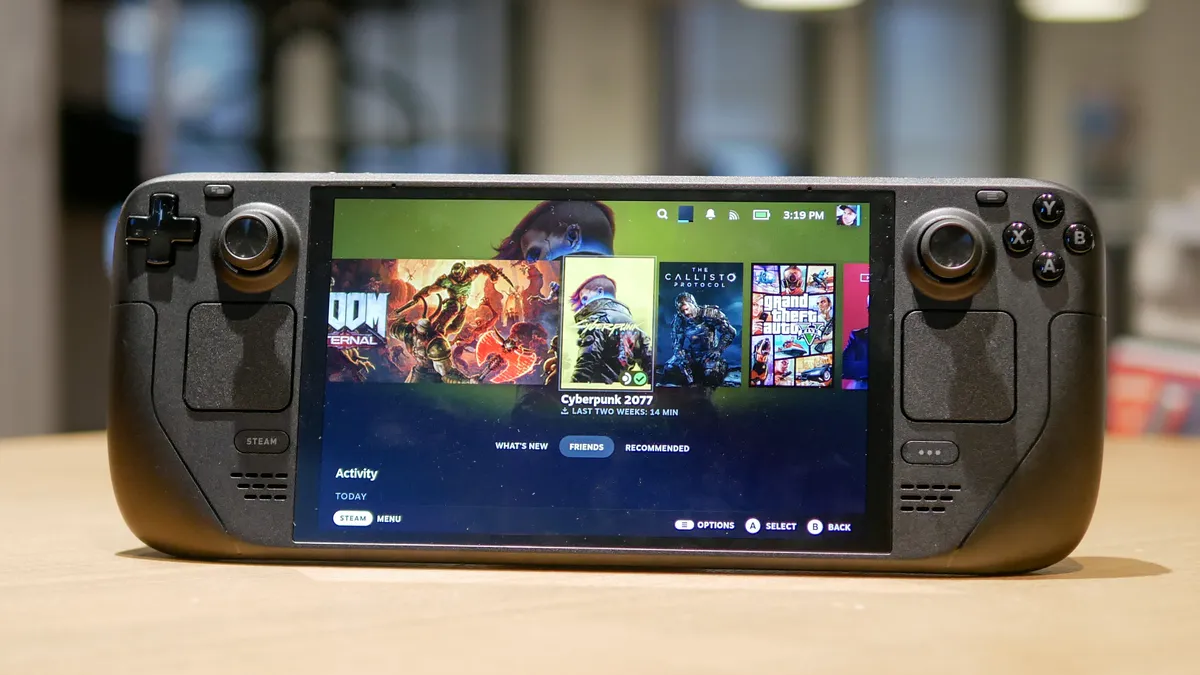
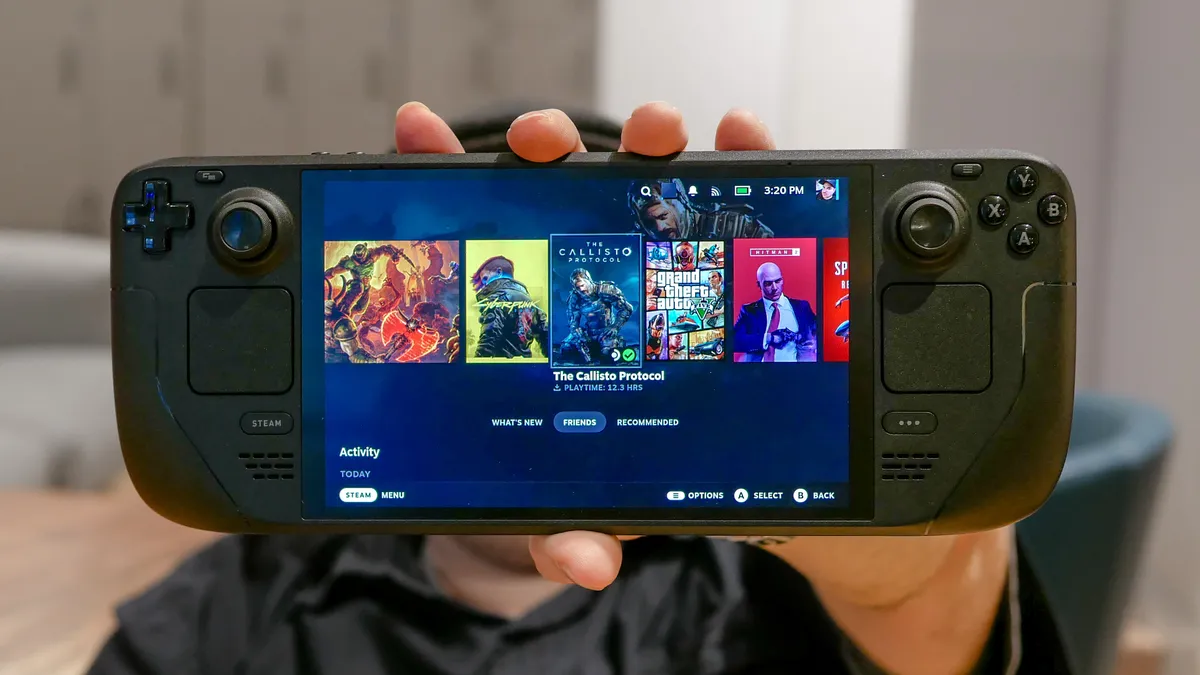
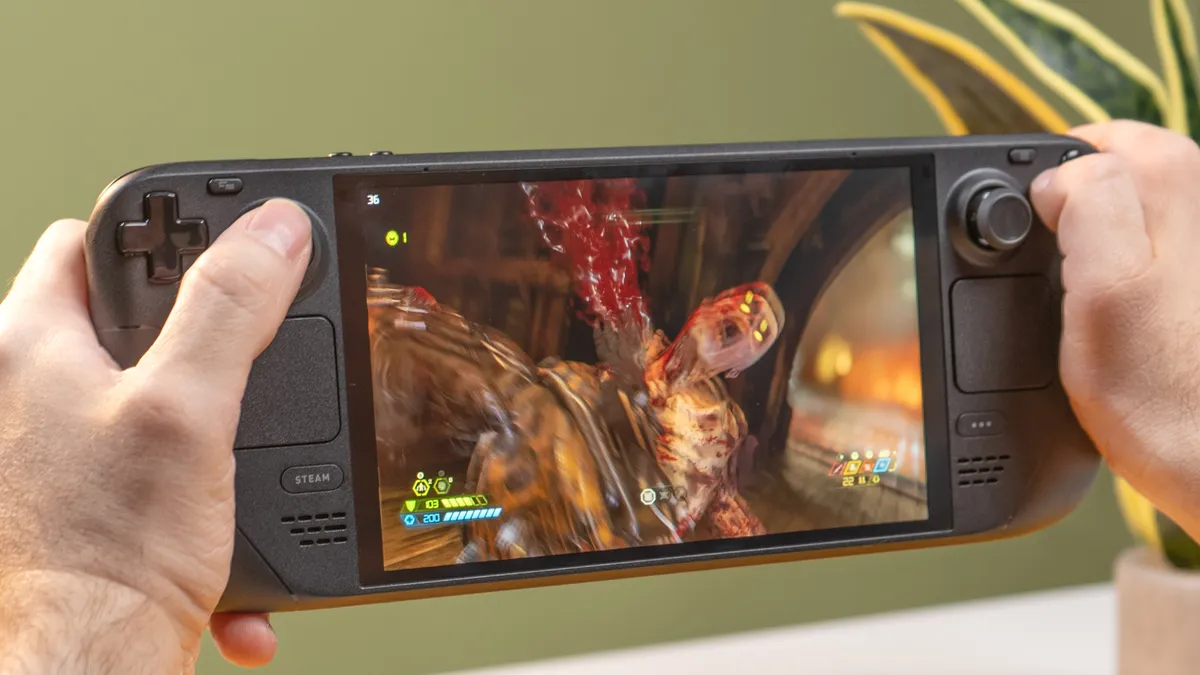



"The Steam Deck OLED improves upon an already great handheld and is now the definitive version to buy for newcomers or hardcore Steam Deck users. The gorgeous OLED panel alone is worth the price of admission, but other updates such as faster Wi-Fi, a lighter build and better cooling make the system more enticing. The Steam Deck OLED sets a new standard for other handhelds to emulate."
The Steam Deck OLED was the real deal. Actually, you could still argue that it's the best handheld gaming PC ever made. It's what kicked off the era of PC handheld gaming, after all. But now, thanks to a price increase, it starts at $789 ($240 up from $549) for 512GB, and don't get me started on the 1TB model (now $949). That's a shame for a device that came out in 2023, but with prices also spiking on other gaming handhelds, you'll still find there's plenty to love about the Steam Deck OLED.
While it’s not a revolutionary upgrade over the original Steam Deck, new features like an OLED HDR-capable display, Wi-Fi 6 and improved cooling make a huge difference. Like its predecessor, this handheld is an engineering marvel.
If you already own a Steam Deck, I still recommend upgrading in the strongest terms… providing you can afford it, of course. Let me be clear about the Deck OLED’s HDR screen: it’s the definition of a “game-changer.” It’s a night-and-day improvement over the subpar LCD panel that often made the best Steam games look washed out on the OG system. Play classics like the Resident Evil 2 remake or Batman: Arkham Knight on the upgraded Deck’s mesmerizing screen and those games now look so much easier on the eyes thanks to the infinite black levels Valve’s revised handheld is now capable of delivering.
If you’ve got a bulging Steam library on either a gaming PC or laptop, Steam Deck OLED gives you a terrific new way to experience your library. SteamOS is a dream to navigate, with Valve creating a console-like interface that works with zero hassle, while the developer also does a marvelous job of telling you what games run well on its handheld PC, thanks to its “Steam Deck Verified” ratings. With its HDR display, going up to 600 nits of brightness, and the strength of SteamOS, the Steam Deck OLED is still hard to beat.
- Read our full Steam Deck OLED review
The best handheld for console gamers



"For years, I’ve been pining for a Nintendo Switch console which is the same but with more powerful components. And Nintendo has given me exactly that. Couple the increased under-the-hood improvements with smart upgrades like the magnetized Joy-Cons and the impressive larger display, and you’ve got the best version of an already excellent system."
The Nintendo Switch 2 is quite an un-Nintendo-like follow-up. Instead of introducing a brand-new form factor, the Japanese gaming titan opted to skip the gimmicks and deliver a console that iterates on its predecessor. Giving gamers more of the same but with across-the-board upgrades was a wise move. Put simply, it's amazing, but be aware that costs are set to rise in September.
This handheld/console hybrid feels like the ultimate version of the Switch concept. It takes everything that worked before and buffs it to a fine sheen. This new system has a larger 7.9-inch 1080p 120Hz display and an upgraded custom Nvidia chip with DLSS, which makes it a rival to machines like the Steam Deck OLED and Asus ROG Ally.
As before, you can slip the system into its dock to switch between playing on your TV or on the go in just seconds, effectively giving you two gaming machines in one. No matter which way you play, you'll be treated to sharp visuals and smooth performance. Because of that, the original Switch feels like a proof of concept in comparison.
These upgrades don't come without some caveats. Due to the extra power under the hood, battery life takes a big hit. Don't expect the Switch 2 to last more than two hours in handheld mode. The Switch 2's larger size can also highlight issues with the console’s flat design that lacks built-in ergonomic grips.
Priced at $449 (and going up to $499 from September 1, so grab it while it's still at its launch price), the Nintendo Switch 2 is squarely in the "premium" category. The hybrid is a more substantial investment and less attractive as a second console for those looking to play exclusive games like Mario, Zelda and Kirby. However, given the admittedly impressive improvements, the price is justified. Right now, this is the ultimate Nintendo Switch console available.
- Read our full Nintendo Switch 2 review
The best value gaming handheld


"The gamer-centric Windows 11 is clean, the design is really comfortable for long play sessions, and the Ryzen Z2A is good enough for indie gaming. The ergonomics are on another level compared to other gaming handhelds — this thing is comfy. On top of that, the re-engineered Windows 11 gives you a slick Xbox UI to navigate over the desktop OS, and the low-end APU doesn’t stress the battery too much."
Now, the more affordable sibling of the fantastic ROG Xbox Ally X didn't impress us with its AMD Ryzen Z2A performance, but the Asus ROG Xbox Ally still does the job for less demanding games, especially at the right settings. However, these days, it has one huge advantage over many gaming handhelds: value.
This is one of the few gaming handhelds that hasn't seen a price increase, meaning the regular $599 ROG Xbox Ally is actually delivering plenty of value these days compared to the rest. You're getting the same great 7-inch 1080p display and amazing ergonomics, just without that real AAA gaming performance. That makes it a great shout for indie gaming! Times have changed since the launch of the ROG Xbox Ally, and it's now definitely worth considering.
You're getting AMD's Ryzen Z2 APU with 4 cores and 8 threads, an LCD panel with variable refresh rate, and a console-inspired Windows 11 UI that lets you jump straight into your library without hassle.
Where the Xbox Ally really shines is comfort. Those pronounced, Xbox-like grips with subtle contours eliminate fatigue over long sessions. Our reviewer, Jason, could play for hours without a hint of cramp, and in the two weeks of testing, sank plenty of time into indie titles at smooth frame rates, enjoying a welcome battery life uplift compared to more power-hungry rivals.
Still, value means trade-offs. In our gameplay testing on Forza Horizon 5, the Ally hovered around 40 FPS at 720p low settings. That's a clear reminder that AAA gaming here means making peace with lowered visuals. But if you're shopping for a budget-friendly Windows handheld and don't want to pony up for the pricier Ally X, the ROG Xbox Ally remains a smart pick today.
- Read our full Asus ROG Xbox Ally review
The best premium gaming handheld


"I can’t deny that the MSI Claw 8 EX AI+ is the best PC gaming handheld I’ve tested — a phenomenally performant and power-efficient system that absolutely cooks AMD. But the sky-high $1,799 price means it’s one I can only recommend to the enthusiasts. For the rest of you, I’d wait for a sale."
The MSI Claw 8 EX AI+ is the very definition of a premium handheld, boasting class-leading performance, but with a price tag that’s hard to ignore. At a staggering $1,799, you’re paying for the best, and in our testing, it delivers: this is the most powerful PC gaming handheld we’ve ever tried, running on Intel’s Arc G3 Extreme (12 Xe3 core GPU) and leaving AMD-based competitors in the dust when it comes to raw muscle.
Whatever the game, the Claw 8 EX AI+ can handle it flawlessly with crazy-high frame rates. Think Cyberpunk 2077 with high settings at 1080p going up to 36 FPS, then 51 FPS with XeSS scaling turned on, and then 171 FPS with 4x multi-frame generation. That kind of power on the go introduces a whole new level of handheld gaming.
You'd think that performance would wipe out battery life, but on the contrary, the Claw 8 EX AI+ has the longest battery life at over 4 hours while gaming. Not only is that thanks to the Intel Arc G3 Extreme chip's incredible power efficiency, but it's also due to the flexibility in CPU wattage, dropping down to just 8 watts with a max of 35 watts. Essentially, the lower the wattage, the more battery life is conserved, but with less performance. But the Claw 8 EX AI+ still delivers ample performance at lower wattage, so you're getting power and long battery life when gaming.
The biggest sticking point? Predictably, its price. $1,799 is more than double the cost of many rivals, and it’s fair to question whether the performance and build justify that leap. For most, that answer will be no — unless you’re seeking absolute handheld supremacy.
In any case, if you want the fastest, most comfortable and polished Windows handheld (and price is no object), the Claw 8 EX AI+ simply outclasses the field. For everyone else, there are handhelds with better value, but for the few who demand the best, this is it.
- Read our full MSI Claw 8 EX AI+ review
The best gaming handheld for Windows


"I live in a paradoxical mind. On the one hand, I sit on my lawn chair saying gaming handhelds have gotten too damn expensive. But on the other hand, I can’t lie — this is the best PC gaming handheld I’ve ever used, and I’d feel OK dropping $999 on it."
Despite what Microsoft says, the Asus ROG Xbox Ally X is not an Xbox! That said, it's still an impressive leap forward for handheld gaming. From the simplification of Windows 11 to boot straight into an easy-to-use Xbox UI, to the ergonomic design and the power under the hood, it’s almost like Microsoft has seen our complaints about Windows gaming handhelds and meticulously addressed each one.
The Xbox controller-inspired body is oh-so comfortable for playing for hours on end, the Ryzen Z2 AI Extreme chip delivers solid performance (further enhanced by a streamlined version of Windows 11), and the 80 Wh battery easily gave me around three hours of playtime on one charge. This is certainly one of the best gaming handhelds you can buy.
But at $999? This PC is a pricey purchase, but one that's now somewhat competitive as we're seeing price hikes left, right and center. And notice that I said “PC,” because the “Xbox Play Anywhere” branding is sure to create some confusion amongst long-time Xbox players looking to dig up their entire library.
Though it's not perfect, the ROG Xbox Ally X is certainly a phenomenal handheld, whether you're an Xbox or PC player. Now, if you've got a lot of extra change and are looking for an OLED upgrade, the ROG Xbox Ally X20 is here to impress. But don't expect a bump in performance. As we put it, the original ROG Xbox Ally X has more value here.
Read our full Asus ROG Xbox Ally X review
The best retro gaming handheld


"The Evercade Nexus is a handheld for a very specific type of gamer. Anybody who wants a play experience rooted in classic games and who feels a little fed up with the baggage of modern gaming will almost certainly fall in love with this nifty retro handheld. At an appealing $199 price point, it gets an awful lot right, and with a vast collection of cartridges available and Banjo-Kazooie as a pack-in, you won’t be short on great games to play."
Missing the games of the past or simply never got around to playing the likes of Banjo-Kazooie? The Evercade Nexus is the ultimate retro gaming handheld we recommend, not just because it lets you play classic titles from the 32-bit and 64-bit era of gaming, but also because of its neat, compact design with great battery and even dual analog sticks.
This is far from what modern gaming handheld consoles offer, but if you're looking for the simpler time of gaming, then you'll be happy to know there's no online ID or subscriptions here, just grab-and-play freedom. Even better, with over 80+ Evercade cartridges to choose from, you can physically own these games. As it stands, there are over 700 games playable on the Nexus through these cartridges, so this will keep you going for a long while.
You'll get a nice, bright 5.89-inch IPS display that's fit for retro gaming, along with dual analog sticks that make titles designed for twin sticks feel more natural. Now, it's not the most comfortable to hold for long sessions, so we'd appreciate some built-in grips, but the buttons feel clicky and snappy. At the very least, you'll be able to play games for over five hours on this handheld, and that says a lot compared to its modern-day counterparts.
We wish this had a suspend feature of sorts to be able to pick up right where you left off in a game, and it can take a while for games to power up (just like a retro console, I suppose), but it's hard not to be a fan of the retro goodness the Evercade Nexus has to offer. I mean, it comes bundled with Banjo-Kazooie and Banjo-Tooie! And that's for a price far less than any other modern handheld right now.
- Read our full Evercade Nexus review
The best Steam Deck alternative


"I once said I wanted a handheld with the ROG Ally X’s specs that ran on SteamOS. I’m happy to say the Lenovo Legion Go S is literally what I’ve asked for. It heralds a brighter future for gaming handhelds and is a fantastic device in its own right. If you’ve considered buying a handheld but didn’t know which one to get, this is the one for you."
The Lenovo Legion Go S with SteamOS is the gaming handheld many have been waiting for. While Windows 11 works well on the best gaming PCs and best gaming laptops, Microsoft’s operating system hasn’t really benefited the best handheld gaming consoles. Now, though, we finally have a non-Steam Deck handheld running on SteamOS, and it’s better than we could have imagined.
The main difference between this and the Lenovo Legion Go S with Windows is their respective operating systems. Besides that, this model has the same design but in a different color. It also has an 8-inch (1920 x 1200) 120Hz LCD, trigger locks for the L2 and R2 buttons, and a rounded D-pad.
This handheld crushes its Windows 11 counterparts on usability alone. But thanks to the improved performance provided by the lean operating system and our review unit’s AMD Z1 Extreme chip, we now have the first true Steam Deck rival.
The problem is, the price of the Lenovo Legion Go S has also skyrocketed (just like the Steam Deck OLED). These days, you'll find it closer to $1,000 and beyond, making it a tough sell when you can grab another handheld with more performance power or storage at a similar price. That said, with SteamOS onboard and its strong gaming performance, there's still more than enough reason to opt for the Lenovo Legion Go S. Just make sure it's with SteamOS!
Read our full Lenovo Legion Go S (SteamOS) review
Battery life tests
No matter how powerful a gaming handheld can get, it's only as good as its battery life! It's all about gaming on the go, after all. Now, depending on the games you play and the settings you tinker with, you could get far less or much more out of these handhelds. But this is an average to expect.
We've done the testing to see just how long these devices last (when gaming):
Best Gaming Handhelds Battery Life Test Results
Benchmarks for the average battery life of gaming handhelds when playing games
Battery life (hh:mm:ss)
| Product | Value |
|---|---|
| Steam Deck OLED | 3.2 |
| Nintendo Switch 2 | 2.6666666666666665 |
| Asus ROG Xbox Ally | 2.466666666666667 |
| MSI Claw 8 EX AI+ | 4.166666666666667 |
| Asus ROG Xbox Ally X | 2.9333333333333336 |
| Evercade Nexus | 5 |
| Lenovo Legion Go S (SteamOS) | 1.75 |

Also tested
What's coming next

We've got more gaming handhelds coming our way in 2026, including all-new chips and designs. So, if you're willing to wait for more portable consoles down the line, here's what to expect:
- The next step in handheld gaming is upon us, as Intel Arc G3 chipsets are here. This includes Intel Arc G3 and Intel Arc G3 Extreme, with the former including Arc B370 integrated graphics (with 10 Xe3 cores) and the latter bringing Arc B390 (with 12 Xe3 cores). These have shaken up the gaming handheld market (as we've seen with the MSI Claw 8 EX AI+), so get ready for more to come.
- During IFA 2026, we got a look at the all-new (and smaller) Acer Predator Atlas 7. This boasts Intel's Arc G3 Extreme, but this time in a slightly smaller 7-inch design than its 8-inch sibling. So far, it's great to hold, and still comes with a big ol' 80Wh battery. It's set to arrive sometime this fall, but the price is still up in the air.
- More gaming handhelds with Intel Arc G3 are coming, including the Acer Predator Atlas 8 and OneXPlayer, so stay tuned for our hands-on testing of everything coming up.
How to choose the best handheld gaming console for you
The best handheld gaming console for your needs depends on where you want to use it. If you value performance above all, then you'll want handhelds packing an AMD Ryzen Z2 Extreme or Intel Arc G3 Extreme, such as the ROG Xbox Ally X and MSI Claw 8 EX AI+. Conversely, if you want a simple-to-use machine that you can hook up to a TV, the Nintendo Switch 2 is the best option.
Price is also a consideration. The ROG Xbox Ally and Switch 2 are the most value-friendly handhelds we've listed above. Conversely, if you want your handheld to double as your PC, any of the Windows machines will fit that task. The latter devices are also good if you want more versatility than SteamOS offers.
Of course, if you're just looking to play the classics on the move, then the Evercade Nexus is a great pick right now.
How we test handheld gaming consoles

Windows handhelds are the easiest to test since our benchmark tools are compatible with Microsoft's operating system. However, we don't have a standardized procedure for testing Nintendo devices or machines running on SteamOS.
Instead, we draw from our experiences with these devices after we give them full reviews. A Nintendo Switch 2 and a Legion Go S, for example, fill very different roles, so devising apples-to-apples tests for them is nearly impossible.
Instead, we evaluate each system’s game library, as well as how well it plays games relative to its hardware. The MSI Claw 8 EX AI+ is more powerful than the Switch 2, but the latter is tailor-made for console gamers, whereas the former is for hardcore PC players.
To earn a spot on this list, a system simply has to play excellent games and be (relatively) small enough to transport easily. For anything beyond that, we rely on our qualitative judgment.
